“Commercial vs Residential Real Estate Investment: Which Is More Profitable in 2026?”

Commercial vs Residential Real Estate Investment: Which Is More Profitable in 2026?





Real estate investors often face a critical question when building or expanding their portfolios: should they focus on commercial or residential properties? In 2026, this decision has become even more relevant as market conditions, tenant behavior, and economic trends continue to evolve across the United States.
Both commercial and residential real estate can be profitable, but they operate under very different dynamics. Understanding how each performs in today’s market—and which aligns better with your financial goals—can make a significant difference in long-term returns.
Understanding the Core Differences
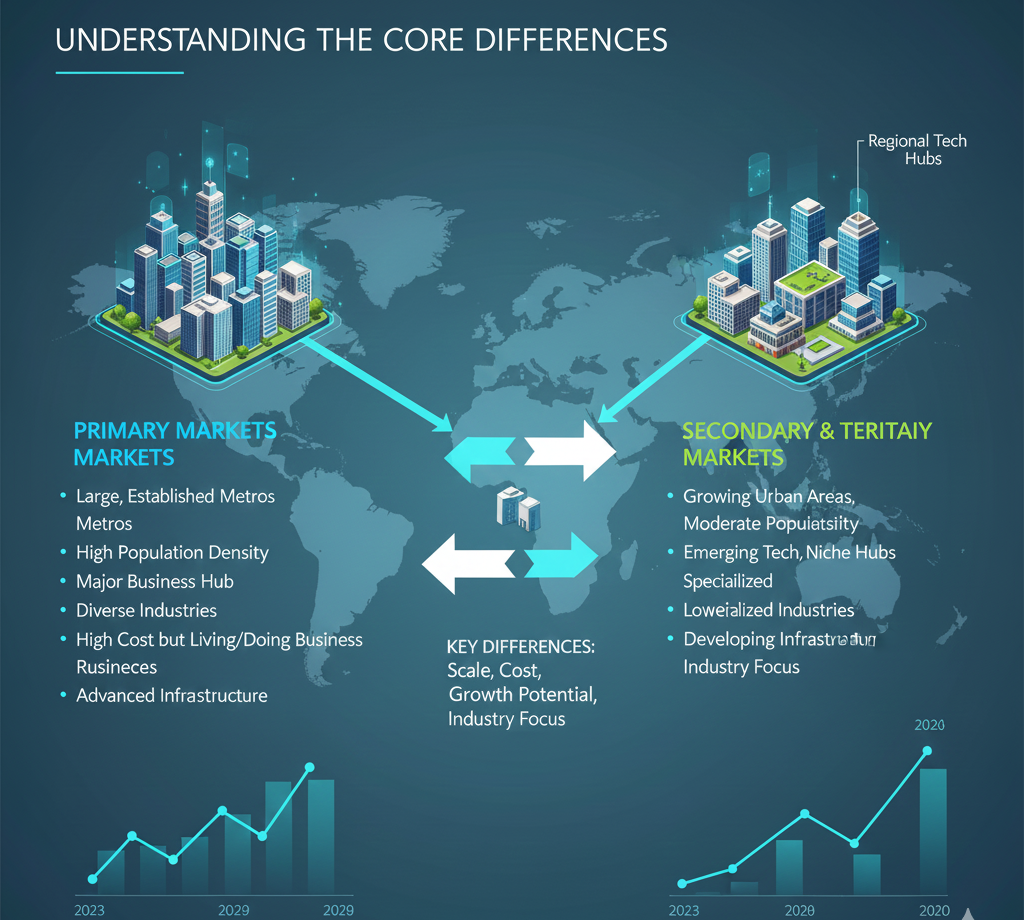
At a basic level, residential real estate includes properties such as single-family homes, apartments, and small multifamily units designed for people to live in. Commercial real estate, on the other hand, covers properties used for business purposes, including office buildings, retail spaces, warehouses, industrial facilities, and medical offices.
The profitability of each depends on factors like cash flow stability, operating costs, risk exposure, financing terms, and market demand.
Profit Potential in Residential Real Estate
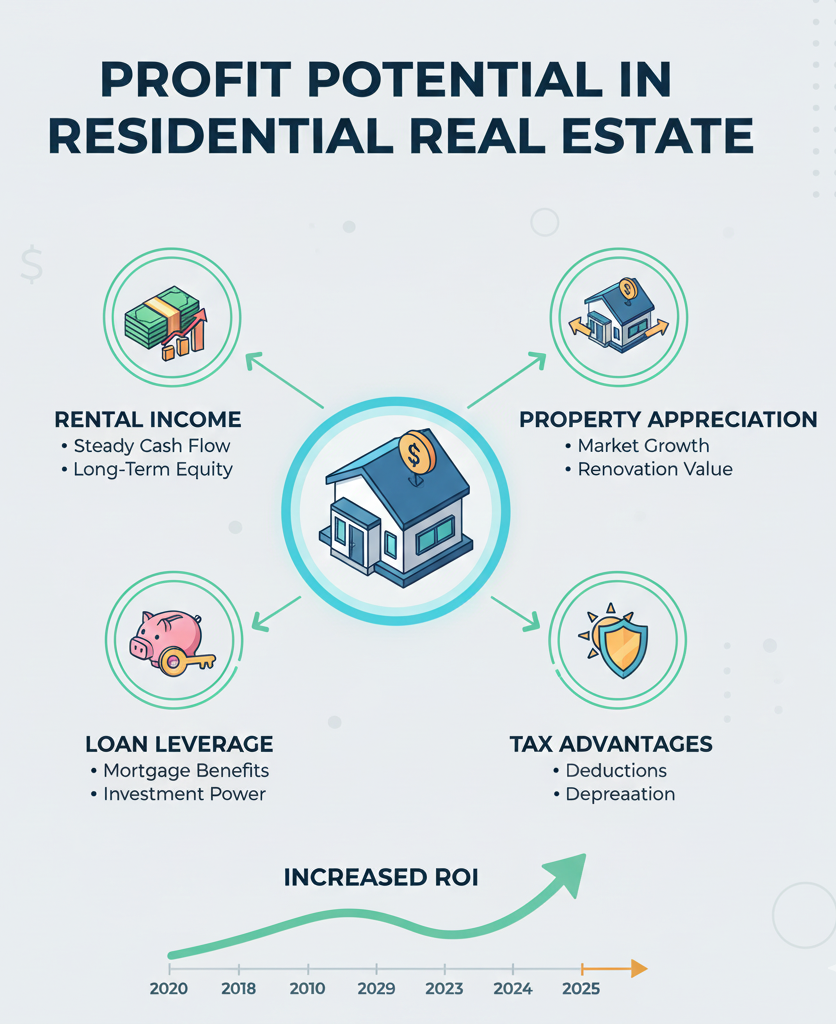
Residential real estate remains the most common entry point for investors, and for good reason. Demand for housing in the U.S. continues to rise due to population growth, affordability challenges, and lifestyle changes that keep many people renting longer.
Key Advantages
-
Consistent demand: People always need a place to live, even during economic slowdowns.
-
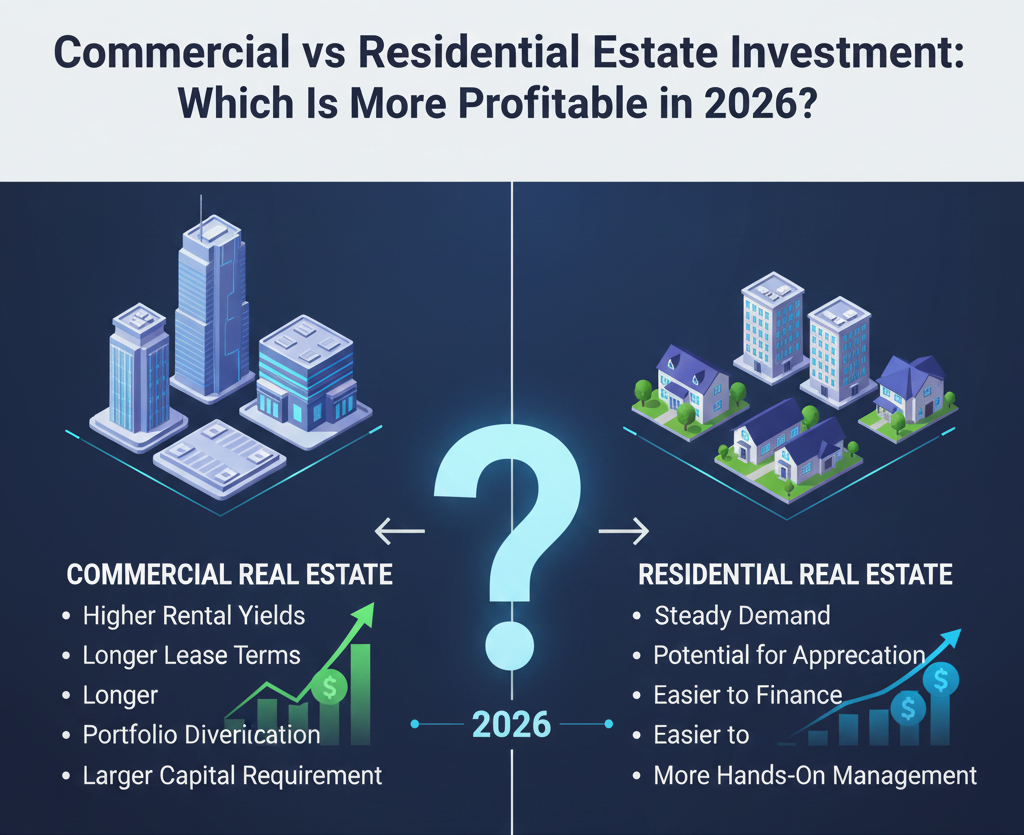
Easier financing: Residential loans typically offer lower interest rates and longer terms.
-
Lower entry costs: Single-family homes and small multifamily properties are more accessible for individual investors.
In 2026, suburban and secondary markets are driving much of the growth in residential investing. Investors who focus on rental-friendly cities with strong job markets can achieve stable cash flow along with steady property appreciation.
However, residential investing often involves more hands-on management. Tenant turnover, maintenance requests, and vacancy periods can impact short-term profitability if not managed properly.
Profit Potential in Commercial Real Estate
Commercial real estate has traditionally attracted investors seeking higher income and scalability. While certain segments—such as traditional office space—have faced challenges, others are thriving.
Strong-Performing Commercial Sectors in 2026
-
Industrial and logistics properties
-
Medical and healthcare facilities
-
Essential retail and mixed-use developments
-
Self-storage and data centers
Key Advantages
-
Higher rental income: Commercial leases generally command higher monthly rents.
-
Longer lease terms: Tenants often sign multi-year agreements, improving income predictability.
-
Triple-net leases: Many commercial leases shift taxes, insurance, and maintenance costs to tenants.
Commercial properties can deliver higher returns, but they also carry higher risks. Vacancies can last longer, capital requirements are larger, and financing is more complex. Market cycles also tend to affect commercial assets more aggressively than residential ones.
Risk Comparison in 2026

When comparing profitability, risk is a critical factor. Residential real estate is generally considered more recession-resistant. Even during economic uncertainty, housing demand tends to remain relatively stable.
Commercial real estate, while potentially more profitable, is more sensitive to:
-
Economic slowdowns
-
Industry-specific disruptions
-
Changes in consumer behavior and technology
Investors in 2026 are increasingly selective, focusing on commercial assets with essential-use tenants and strong long-term demand drivers.
Cash Flow vs Appreciation
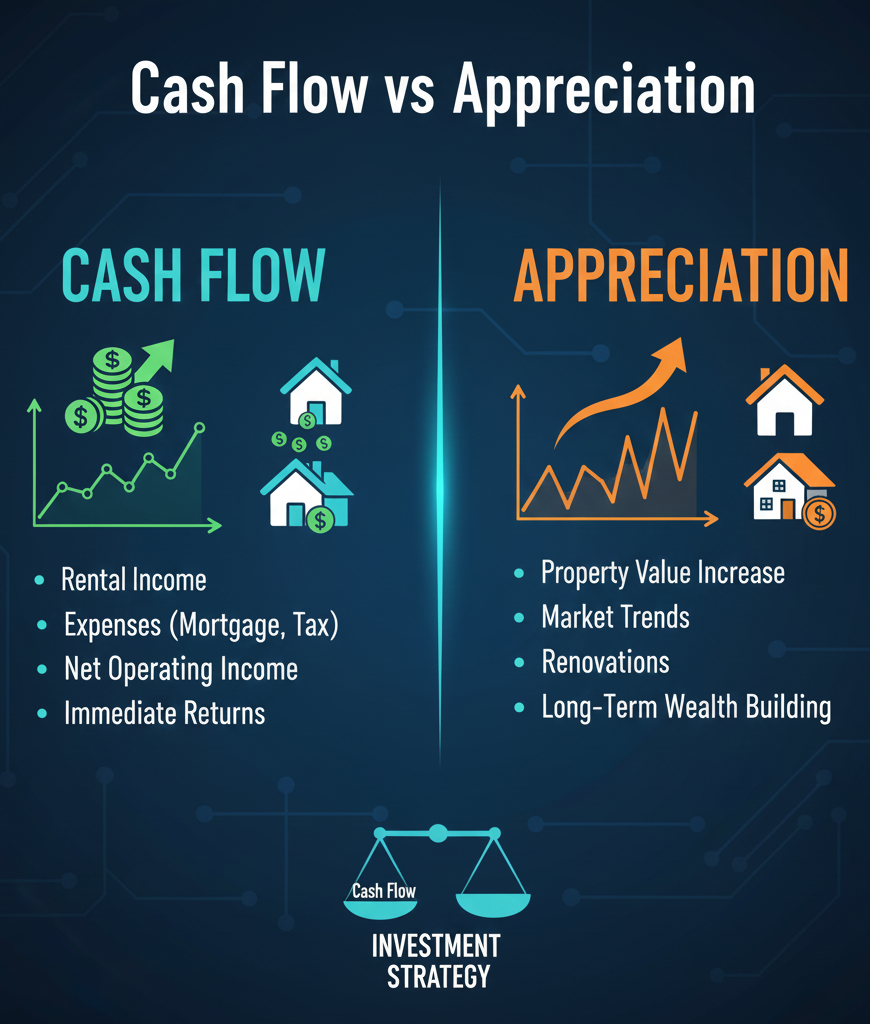
Residential properties often shine in long-term appreciation, especially in high-growth markets. Over time, rising rents and increasing property values can compound returns.
Commercial properties, by contrast, are often valued based on income performance. Increasing rent or improving lease terms can directly boost property value, creating opportunities for faster equity growth.
In short:
-
Residential real estate favors steady growth and lower volatility
-
Commercial real estate favors higher cash flow and scalable income
Which Is More Profitable in 2026?

There is no universal answer. Profitability depends on your strategy, capital, and tolerance for risk.
Residential real estate may be more profitable for:
-
New or conservative investors
-
Those seeking predictable cash flow
-
Long-term wealth builders
Commercial real estate may be more profitable for:
-
Experienced investors
-
Those seeking higher income potential
-
Investors comfortable with complex deals and larger capital commitments
Many successful investors blend both asset types to balance risk and maximize returns.
Final Thoughts

In 2026, both commercial and residential real estate continue to offer profitable opportunities—but only when approached strategically. Residential investments provide stability and accessibility, while commercial assets offer income potential and scalability.
The most profitable path is not choosing one over the other blindly, but understanding how each fits into your broader financial goals. With careful market analysis, proper management, and long-term planning, either strategy—or a combination of both—can deliver strong results in today’s evolving real estate landscape.