Real Estate Investment Trusts (REITs) Explained: Safe Income or Risky Asset?
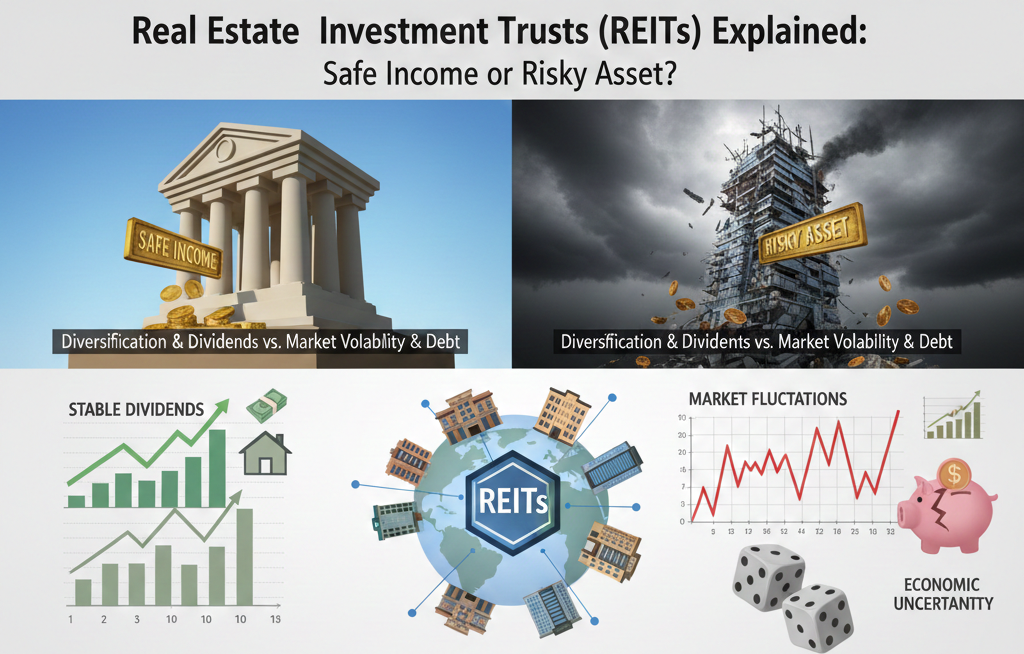
Real Estate Investment Trusts, commonly known as REITs, have become a popular option for investors who want exposure to real estate without the responsibility of owning physical property. In 2026, REITs continue to attract attention for their income potential, liquidity, and accessibility—but many investors still ask the same question: are REITs a safe source of income, or are they a risky asset?






The answer depends on how REITs are structured, what assets they hold, and how they fit into your overall investment strategy. This article breaks down how REITs work, their benefits, risks, and whether they make sense for income-focused investors today.
What Are REITs and How Do They Work?
A REIT is a company that owns, operates, or finances income-producing real estate. These properties may include apartment buildings, shopping centers, warehouses, office buildings, healthcare facilities, or data centers.
To qualify as a REIT in the U.S., a company must meet specific requirements, including distributing at least 90% of its taxable income to shareholders in the form of dividends. This structure is what makes REITs particularly attractive for investors seeking regular income.
REITs are typically categorized into three main types:
-
Equity REITs, which own and manage properties
-
Mortgage REITs, which invest in real estate debt
-
Hybrid REITs, which combine both approaches
Why Investors See REITs as a Safe Income Source
Many investors view REITs as a relatively stable income investment, especially compared to more volatile asset classes.
1. Consistent Dividend Payments
Because REITs are required to distribute most of their income, they often provide higher dividend yields than traditional stocks.
2. Diversification Across Properties
REITs usually own portfolios of properties across different locations and sectors, reducing reliance on a single asset.
3. Professional Management
REITs are managed by experienced teams that handle leasing, maintenance, financing, and acquisitions, removing operational burdens from investors.
4. Liquidity
Publicly traded REITs can be bought and sold like stocks, offering liquidity that direct real estate ownership does not.
The Risks Investors Should Understand
Despite their income appeal, REITs are not risk-free.
Interest Rate Sensitivity
REIT prices often react negatively to rising interest rates, as higher rates increase borrowing costs and make fixed-income investments more competitive.
Market Volatility
Public REITs are traded on stock exchanges, meaning their prices can fluctuate daily—even if the underlying real estate remains stable.
Sector-Specific Risk
Not all REITs perform equally. Office REITs, for example, face different challenges than industrial or healthcare REITs. Choosing the wrong sector can significantly impact returns.
Dividend Sustainability
High dividend yields may look attractive, but they are not guaranteed. Poor management, declining occupancy, or economic downturns can lead to reduced payouts.
REIT Performance in 2026: What’s Changed?

In 2026, REIT performance varies widely by sector:
-
Industrial and logistics REITs benefit from continued e-commerce growth
-
Healthcare REITs gain support from aging demographics
-
Data center REITs are driven by digital infrastructure demand
-
Retail REITs focused on essential services remain resilient
Meanwhile, traditional office-focused REITs face ongoing pressure as hybrid work reshapes demand.
Investors who focus on sector trends and balance sheets are better positioned to manage risk.
REITs vs Direct Real Estate Investing
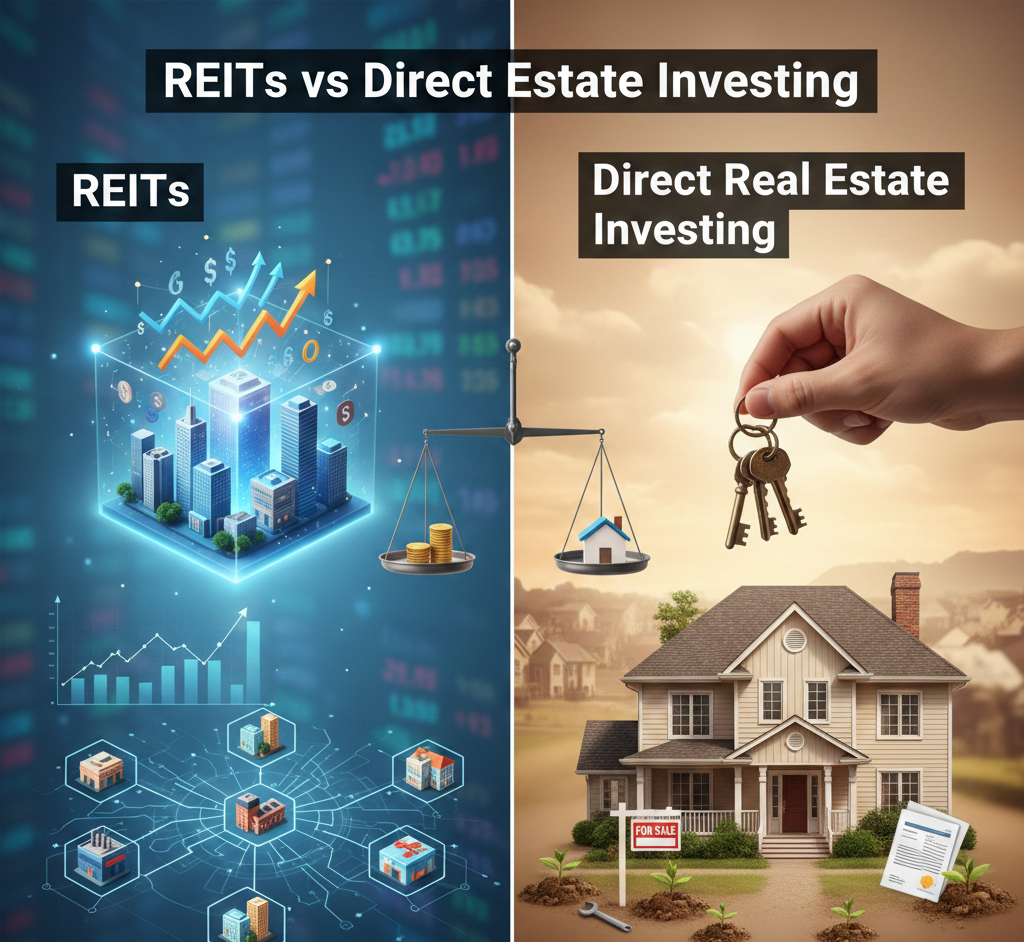
REITs offer a different risk-return profile compared to owning property directly.
REIT advantages:
-
Low capital requirements
-
High liquidity
-
No property management responsibilities
Direct real estate advantages:
-
Greater control over assets
-
Strong tax benefits like depreciation
-
Potential for higher returns through active management
Many experienced investors use REITs as a complement to direct real estate rather than a replacement.
Are REITs Right for You?
REITs may be a good fit if you:
-
Want passive real estate income
-
Prefer liquidity over control
-
Have limited capital or time
They may be less suitable if you:
-
Seek full control over assets
-
Want to maximize tax advantages
-
Are sensitive to stock market volatility
As with any investment, alignment with your goals matters more than labels like “safe” or “risky.”
Final Thoughts

So, are REITs a safe income source or a risky asset? In reality, they are neither purely safe nor excessively risky. REITs sit somewhere in between, offering income potential with market-driven risks.
In 2026, well-selected REITs can play a valuable role in a diversified portfolio—especially for investors seeking steady income without operational complexity. The key lies in understanding the underlying assets, choosing strong management teams, and maintaining realistic expectations.
When used strategically, REITs can provide both income and exposure to long-term real estate growth.