“Real Estate Investment Mistakes That Cost Investors Millions (And How to Avoid Them)”

Real Estate Investment Mistakes That Cost Investors Millions (And How to Avoid Them)
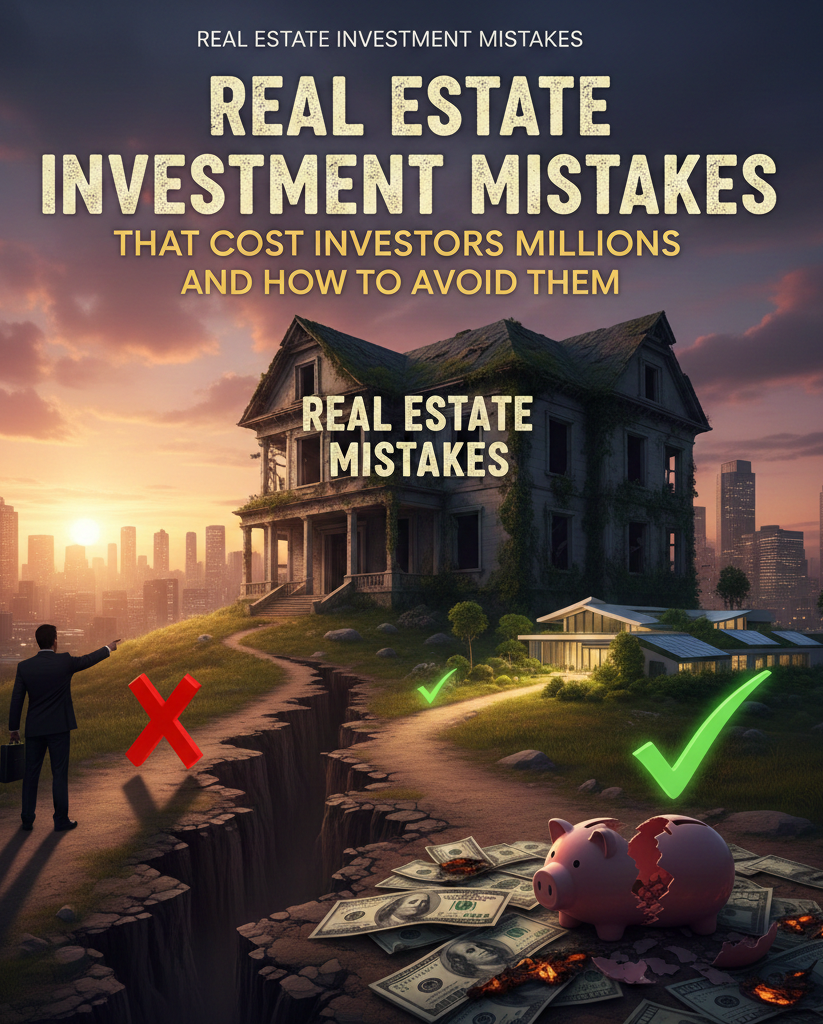
Real estate has created enormous wealth—but it has also destroyed fortunes when investors make avoidable mistakes. Many losses don’t come from bad luck or market crashes, but from poor decisions, weak planning, and emotional investing. In 2026, as markets become more competitive and data-driven, the cost of mistakes is higher than ever.



Understanding the most common real estate investment mistakes can save you millions over the lifetime of your portfolio. More importantly, learning how to avoid them puts you on the path to consistent, long-term success.
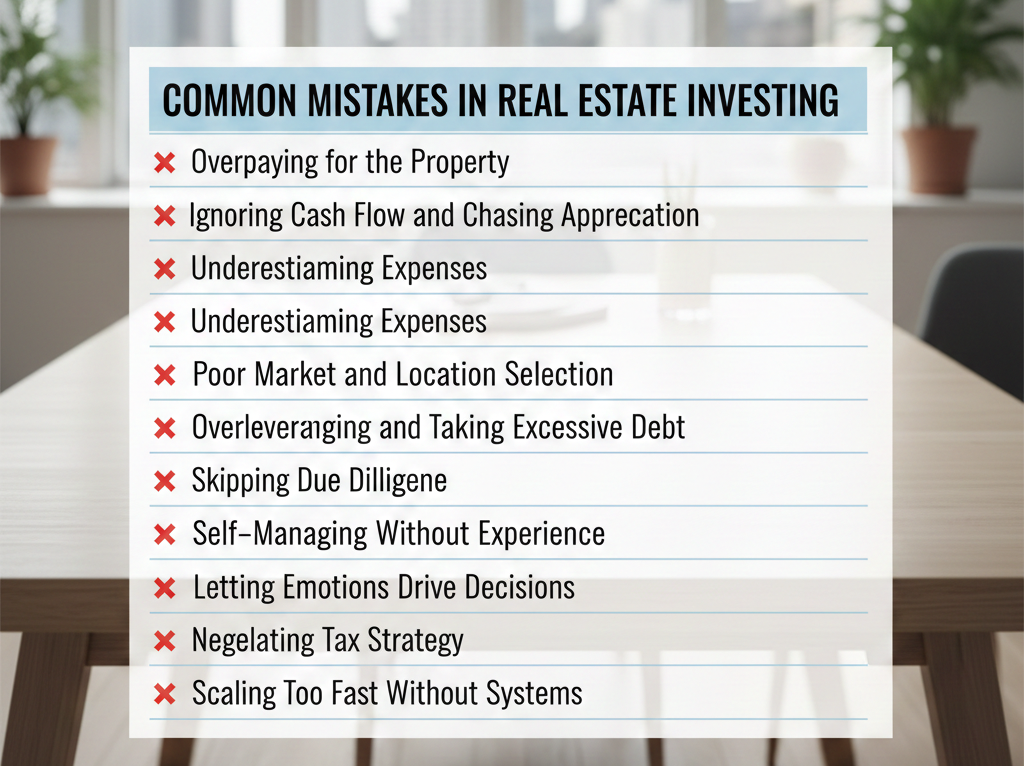
1. Overpaying for the Property
One of the most expensive mistakes investors make is buying at the wrong price. Overpaying immediately reduces cash flow, limits appreciation upside, and increases risk during market corrections.
How to avoid it:
-
Analyze comparable sales, not asking prices
-
Base offers on numbers, not emotions
-
Walk away if the deal doesn’t meet your return criteria
Profitable investing starts at the purchase price, not after renovations.
2. Ignoring Cash Flow and Chasing Appreciation
Many investors lose money by betting solely on future appreciation. While property values often rise over time, appreciation is never guaranteed.
How to avoid it:
-
Prioritize positive cash flow from day one
-
Stress-test returns using conservative rent estimates
-
Treat appreciation as a bonus, not the foundation
Cash flow keeps you solvent; appreciation builds wealth.
3. Underestimating Expenses
Small miscalculations in expenses can turn a profitable deal into a financial drain. Maintenance, vacancies, property management, taxes, and insurance add up quickly.
How to avoid it:
-
Use realistic expense ratios
-
Budget for repairs and capital expenditures
-
Plan for vacancy periods
Successful investors plan for problems before they happen.
4. Poor Market and Location Selection
A great property in the wrong location is rarely a great investment. Investors often focus on the property itself and ignore local market fundamentals.
How to avoid it:
-
Invest in areas with job growth and population inflow
-
Research landlord-tenant laws
-
Understand neighborhood trends, not just city averages
Location drives demand, rent growth, and long-term appreciation.
5. Overleveraging and Taking Excessive Debt
Leverage can accelerate wealth, but excessive debt magnifies losses. Many investors get wiped out by aggressive borrowing when rents decline or interest rates rise.
How to avoid it:
-
Use conservative loan-to-value ratios
-
Maintain cash reserves
-
Choose fixed-rate financing when possible
Smart leverage protects upside while limiting downside risk.
6. Skipping Due Diligence
Rushing into deals without proper inspections, financial analysis, or legal review is a costly mistake.
How to avoid it:
-
Conduct thorough property inspections
-
Review leases and financial records carefully
-
Verify zoning, permits, and compliance
Due diligence is not optional—it’s insurance against expensive surprises.
7. Self-Managing Without Experience
New investors often underestimate the time and skill required to manage properties. Poor tenant screening and delayed maintenance can destroy profitability.
How to avoid it:
-
Hire professional property managers when needed
-
Learn tenant laws and best practices
-
Value your time as part of the investment cost
Passive income should not come at the cost of burnout.
8. Letting Emotions Drive Decisions
Fear and greed are silent wealth killers. Emotional buying and panic selling cause investors to make poor timing decisions.
How to avoid it:
-
Rely on data and written investment criteria
-
Avoid market hype and speculation
-
Commit to a long-term plan
Consistency beats emotional reactions every time.
9. Neglecting Tax Strategy
Ignoring tax planning can quietly drain profits year after year. Many investors fail to use deductions and deferral strategies available to them.
How to avoid it:
-
Understand depreciation and expense deductions
-
Use 1031 exchanges when scaling
-
Work with tax professionals who specialize in real estate
Tax efficiency often separates average investors from wealthy ones.
10. Scaling Too Fast Without Systems
Rapid growth without proper systems leads to chaos. Investors who expand too quickly often lose control of cash flow and operations.
How to avoid it:
-
Build processes before adding properties
-
Track performance with clear metrics
-
Scale gradually and intentionally
Sustainable growth is more valuable than rapid expansion.
Why Avoiding Mistakes Matters More Than Finding “Perfect” Deals
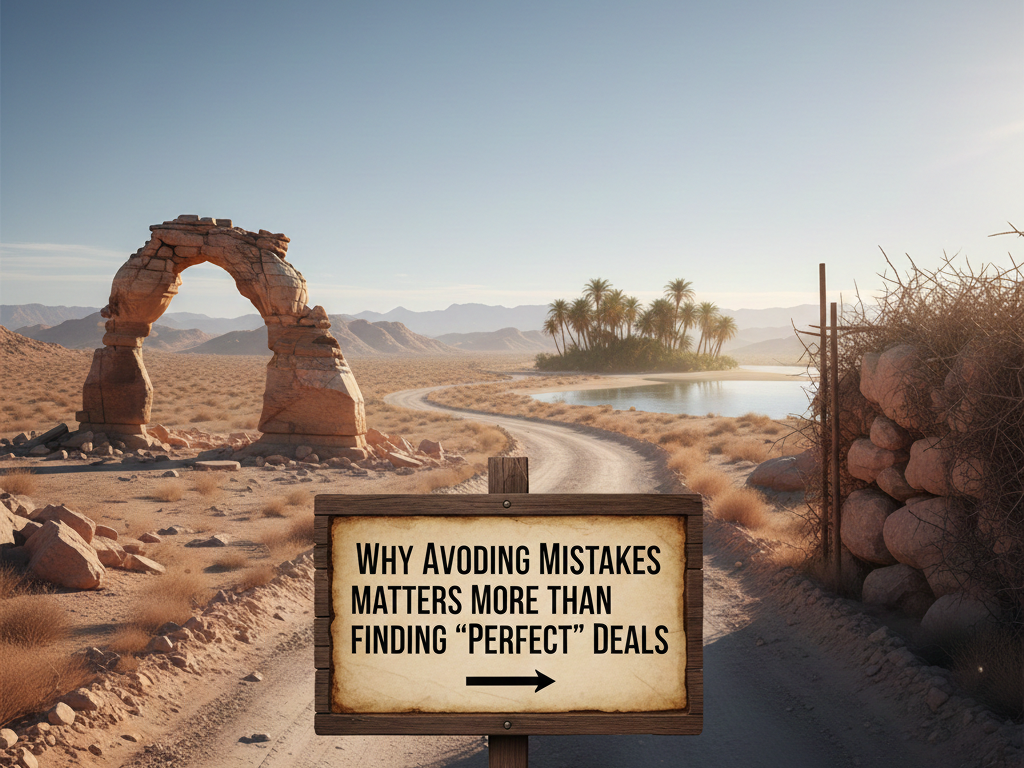
In real estate, avoiding big mistakes is often more important than finding home-run investments. Steady, disciplined decisions compound over time, while a single major error can erase years of gains.
Successful investors focus on risk management, not just returns.
Final Thoughts

Real estate investing does not require genius—but it does require discipline, patience, and education. The mistakes that cost investors millions are usually preventable, yet they are repeated again and again by those who skip fundamentals.
In 2026, the investors who thrive are not the ones chasing trends, but those who follow proven principles, manage risk carefully, and stay committed to long-term strategy. Avoiding these costly mistakes won’t just protect your capital—it will dramatically increase your chances of building lasting wealth through real estate.